
Secteurs
Solutions
Capacités
À propos
Perspectives
Secteurs
Solutions
Capacités
À propos
Perspectives

Direct-to-patient (DTP) is a distribution model in which pharmaceutical companies deliver medications straight to a patient’s home through a manufacturer-run or partner pharmacy, bypassing retail pharmacies, clinics, and wholesalers.
DTP is gaining popularity among pharmaceutical companies of all sizes. Patients value the convenience, and drugmakers benefit from eliminating wholesaler fees. Its growth follows naturally from the rise of telehealth. The broader U.S. direct-to-patient market, which includes telehealth and patient support services, is valued at about USD $83B in 2026, with an expected CAGR of 11.7% through 2033 [1].
Adoption among drugmakers is just as strong. In a 2025 industry survey, 42% of pharma respondents said their company already runs a DTP program, and another 51% are planning or exploring one [2]. DTP is not a passing trend. To remain competitive, pharma companies should strongly consider adding DTP offerings to their portfolios, and should address its new logistics and packaging challenges early.

Most pharma DTP programs fall into two models. Full-service platforms combine telehealth, prescribing, payment support, and home delivery in one patient journey. Targeted programs focus on a few brands, offering a transparent cash price and home delivery through a partner pharmacy [3]. Since Eli Lilly launched the first major platform in early 2024, most large drugmakers have followed [3][4].
| Program | Company | Launched | Business Model |
|---|---|---|---|
| LillyDirect | Eli Lilly | Early 2024 | Full-service: telehealth, pharmacy fulfillment, and payment support |
| PfizerForAll | Pfizer | Fall 2024 | Full-service: telehealth, vaccines, and prescription access |
| NovoCare Pharmacy | Novo Nordisk | 2025 | Targeted: flat cash-pay pricing for GLP-1 therapies |
| AstraZeneca Direct | AstraZeneca | October 2025 | Targeted: cash pricing and home delivery for select brands |
| AmgenNow | Amgen | October 2025 | Targeted: cash-pay access to Repatha |
Every one of these programs ends the same way: a sealed package arriving at a patient’s door. That final step is where packaging decisions start to matter.
For patients, DTP simplifies the supply chain. They receive treatments faster and easier, and often pay less. For pharmaceutical companies, the switch creates new challenges in physically getting drugs to patients.
In the value chain for Rx pharmaceuticals, an authorized dispenser cannot be removed from the delivery process. Drugmakers either set up their own pharmacy or partner with one. Either way, packaging must now be designed, validated, and manufactured to travel from the point of production to thousands of individual residential addresses.
That shift changes three requirements most. Products must be traced at the package level rather than the batch level, because the Drug Supply Chain Security Act (DSCSA) requires electronic, interoperable tracing of each saleable unit in the U.S. Packaging must also protect the drug through parcel networks, which expose it to heat, cold, humidity, and handling that warehouse-to-pharmacy shipping avoids. Finally, every package must arrive sealed, show any sign of tampering, and reach the right recipient.
These requirements add cost and reduce economies of scale. DTP can still deliver overall savings, because drugmakers no longer pay intermediary distributors.
Packaging is one of the easiest places to recover logistics costs in a DTP model. For moisture-sensitive solid oral doses, the choice of desiccant matters most for inventory and transit stability.
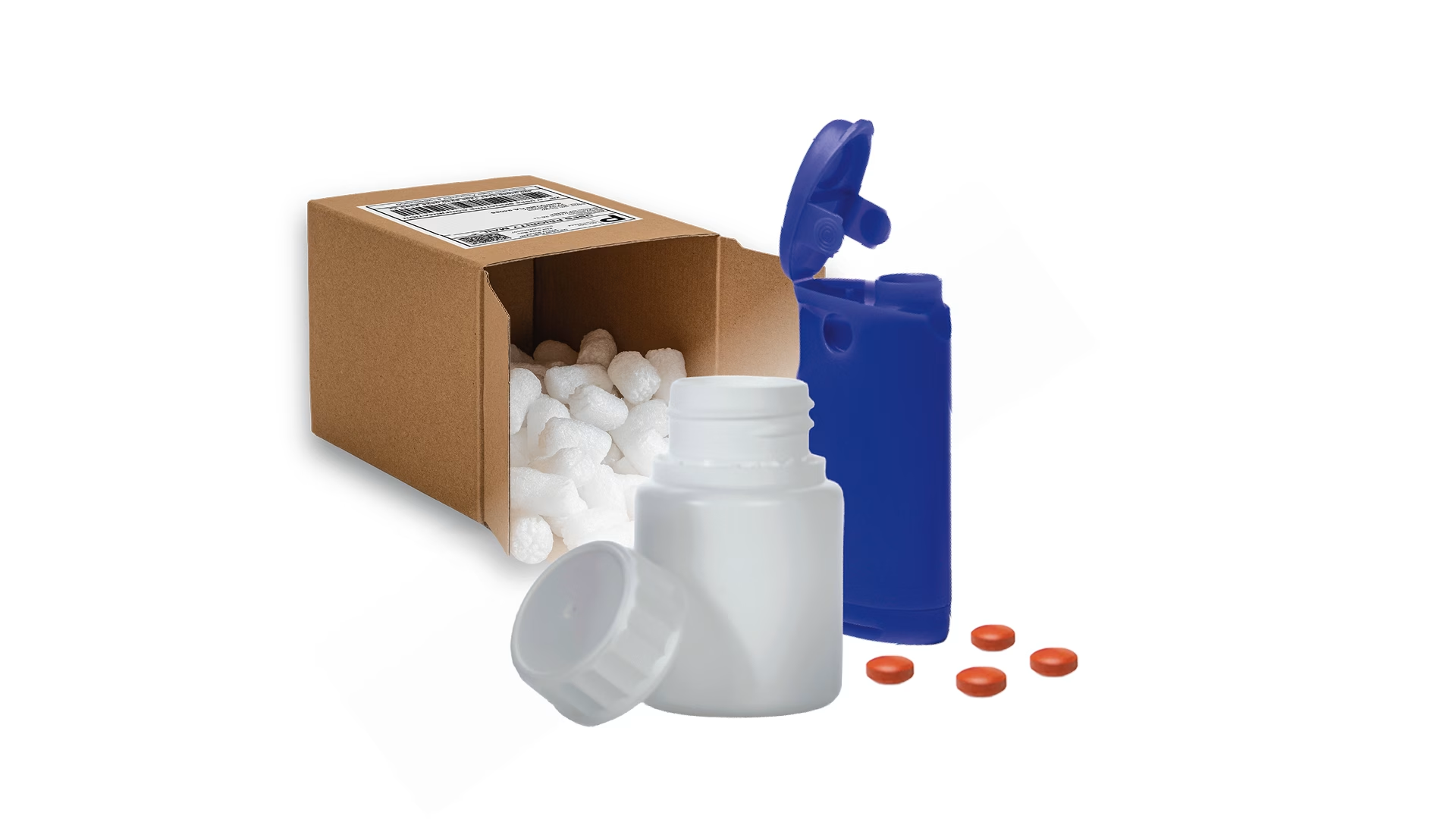
Injection blow molded bottles with integrated desiccants, such as those manufactured by Sanner, are a strong solution for many drugs. High-precision manufacturing reduces opportunities for moisture ingress. With no loose desiccant packet in the way, bottles fill faster and hold more product.
The process also produces less waste than other methods, and the overall system provides a lower total cost of ownership.
When logistics are changing this much, these gains make DTP operations far more manageable.
DTP turns packaging into part of the brand. Pharmacies and clinics order medications based on expected demand, not on how the container looks. When a drugmaker sells directly to patients, a distinctive, branded package reminds them why they chose this product over a competitor or generic.
Over-the-counter brands have long understood this. A recognizable shape, color, or closure helps a product stand out and signals quality before the package is ever opened. DTP gives prescription brands the same opportunity, and patients who are happy with the whole experience, packaging included, are more likely to stay loyal.
Well-designed DTP packaging should also make daily life easier. Patients increasingly carry medications to work, school, and outings rather than keeping them in a cabinet, so the package needs to be compact enough for a pocket or bag. It should be easy to open, ideally with one hand, for patients with limited dexterity such as older adults or people with disabilities. At the same time, it must remain child-resistant, as the Poison Prevention Packaging Act requires for most oral prescription drugs in the U.S., and stay sealed against spills and moisture in a purse or backpack.
Balancing portability, ease of opening, child resistance, and protection is difficult, but meeting all four drives patient satisfaction. These challenges led Sanner to create TabTec® CR: a child-resistant, pocket-sized container with an integrated desiccant that opens easily with two fingers. Packaging like this solves several patient pain points at once, making it well suited to DTP programs.
Before launching a DTP program, confirm your packaging is ready for the trip to a patient’s door. Packaging changes take time to design and validate, so review these five points early in program planning.
Going direct-to-patient overhauls packaging requirements across proportions, protection, and portability. The strongest DTP programs use packaging that benefits drugmakers and patients alike. Building one is not simple, but the work is easier alongside a partner with decades of experience in both standard and custom packaging design and manufacturing.
Learn more about Sanner’s direct-to-patient capabilities, or get in touch with us today.