

Iparágak
Megoldások
Képességek
Rólunk
Betekintések
Iparágak
Megoldások
Képességek
Rólunk
Betekintések

Engineers and scientists are working hard to revolutionize the way patients take new and existing drugs.
Many of the new drugs under development are biologics, which tend to be unsuitable for taking orally (as a pill) because the liver metabolizes them. A classic example of a widely-used biologic drug is insulin for diabetes mellitus.
Therefore injection is the most common way of taking biologics.
Some of the biologic drugs, particularly monoclonal antibodies, require large masses to be injected. In order to inject a large drug mass, we have two choices: increase the injection volume, or increase the concentration of drug in the formulation.
Injecting a large volume requires either:
In addition, many injection devices are limited to 1 mL volume because:
Increasing the concentration of the drug in the liquid increases the formulation viscosity, which cannot become too great because:
There are various autoinjector technologies which do not contain a glass syringe, such as:
These autoinjectors may be able to deliver viscous drugs, but still tend to be limited in injection volume due to the discomfort of injecting large volumes quickly and the difficulty in holding the autoinjector steady for long enough.
The solution may be a different class of injection device: the bolus injector (sometimes called a „patch pump,” although this term is also used for ambulatory infusion pumps).
A bolus injector may be described as a device with performance and usage between current autoinjectors and infusion pumps:
There are too many bolus injectors in development to list here, but some examples are:
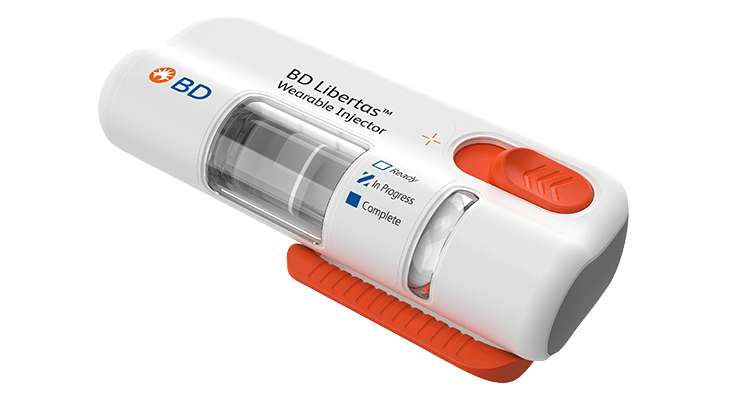
BD is developing the Libertas bolus injector built around a pre-filled BD Neopak syringe.
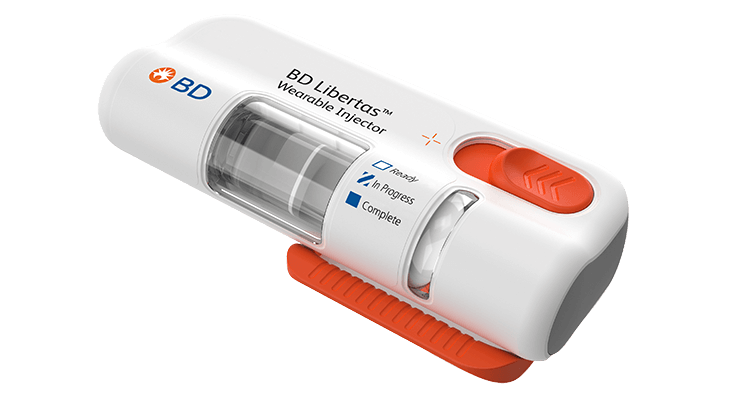
BD Libertas
West has launched the Smart Dose injector for Amgen’s Repatha drug. The device is based on the Crystal Zenith plastic cartridge.
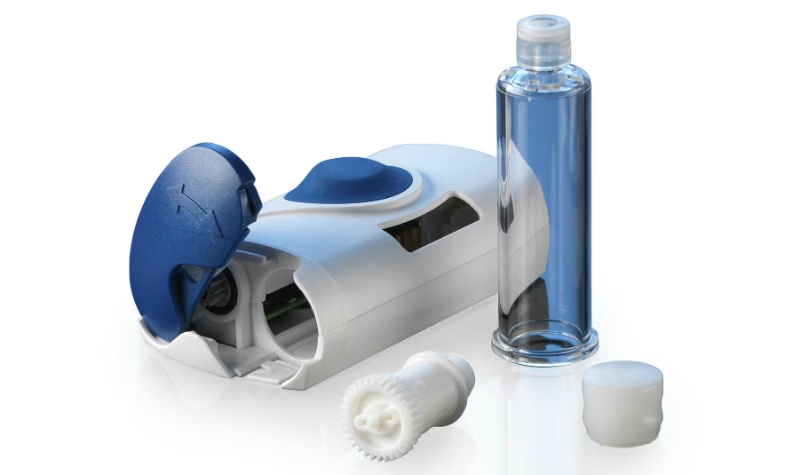
West SmartDose
Enable Injections is working hard on its eponymous device, which takes a different approach to the prefilled devices above: the drug is supplied in a separate vial or syringe, then a filling pump fills the injector with the drug formulation shortly before attaching the injector to the body. This means that the device avoids some of the regulatory hurdle of proving drug stability for many months before use.
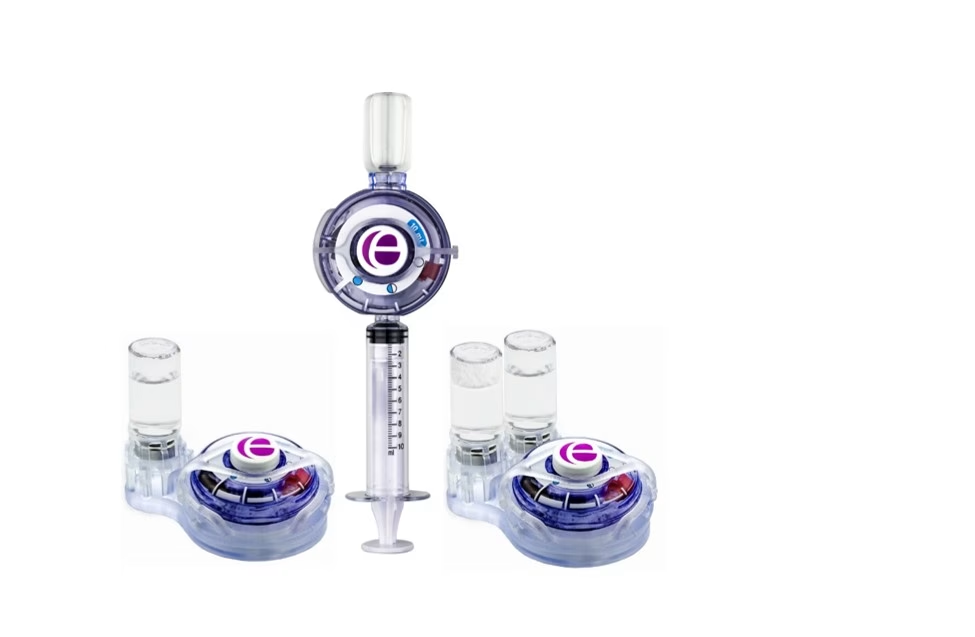
Enable Injections
SteadyMed is developing the PatchPump platform which uses an expanding battery to force drug out of a flexible primary drug container.
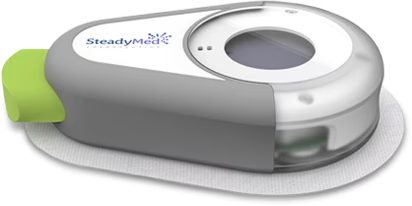
SteadyMed PatchPump (R)
Sensile Medical has various formats of pump based around its core micropump technology.
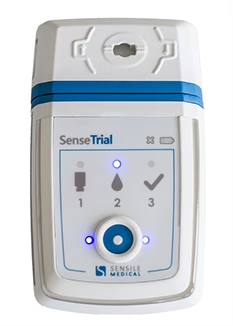
Sensile SenseTrial
Ypsomed is promoting its YpsoDose concept based on 5 mL or 10 mL prefilled glass cartridges.
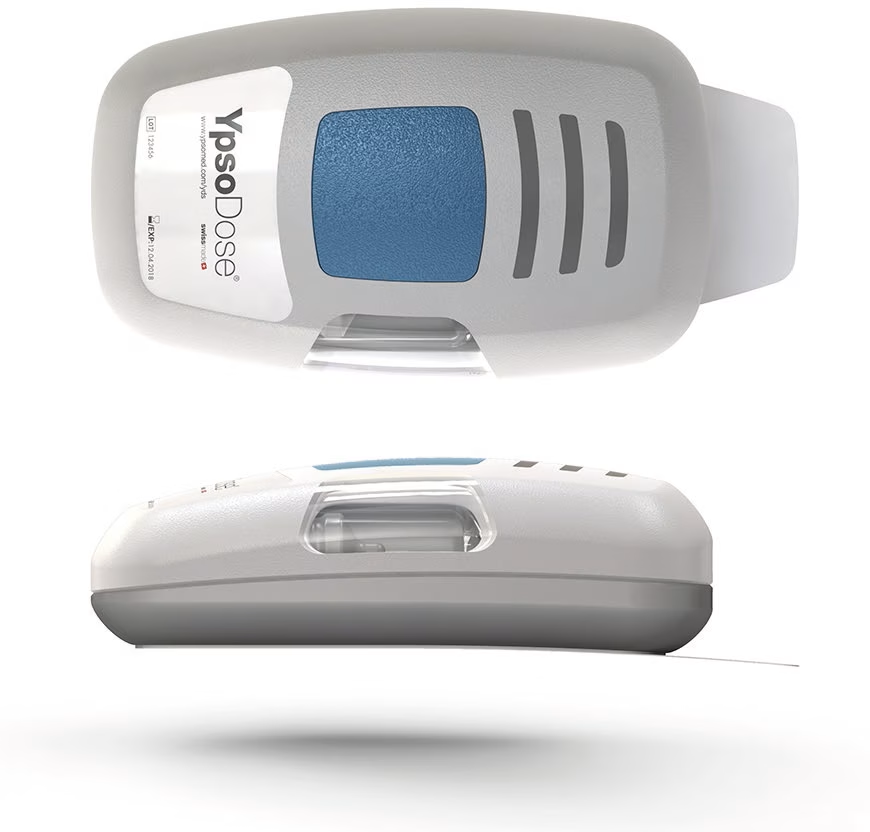
Ypsomed YpsoDose
Bespak has created a prototype demonstrator of a HFA gas-powered bolus injector, called Lapas.
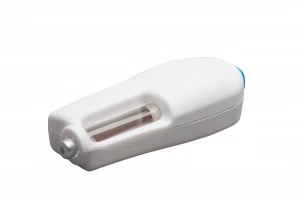
Bespak Lapas
There are many other devices in development, such as the NeuroDerm continuous subcutaneous infusers. Others have been mothballed or cancelled, or otherwise fallen by the wayside such as the Roche Single Injection Device (formerly MyDose), Ratio Drug Delivery’s NuPrivo, and Unilife’s Precision Therapy.
If your organization is developing a bolus injector and you have recommendations for improving the list above, please get in touch.
Many bolus injector designs use a novel primary pack, and pharmaceutical companies are very reluctant to risk their drug launch on new materials and designs. Device developers are trying to reduce the risk by using materials that have been used with drugs before.
The second challenge is that a new primary drug container is likely to be incompatible with the pharmaceutical companies’ aseptic filling lines, which are extremely expensive and time-consuming to build and validate.
In addition, some bolus injectors have advanced features such as automatic needle insertion and electronic control which increase development complexity.
Finally, new devices must meet the newly raised regulatory demands on usability (human factors).
The drug delivery device industry is working hard to define the requirements and test methods for acceptable bolus injectors, which are likely to become ISO 11608 part 6.
We expect that bolus injectors will become a familiar part of the drug delivery device space, and that they could enable exciting new therapies such as regenerative medicine.
If you would like to know more about bolus injectors, or need to procure or develop one, please get in touch. Sanner regularly designs and develops injection technologies and conducts technology scouting, technology procurement, and due diligence for our clients’ projects.
Full disclosure: the author has worked on numerous injection device developments for pharmaceutical companies and device manufacturers, and has been asked to attend the meetings to draft ‘ISO 11608-6 Needle-based injection systems for medical use – Requirements and test methods – Part 6: Bolus Injectors.’