行业
解决方案
实力
关于
洞察

行业
解决方案
实力
关于
洞察

David Orenstein is a Senior Human Factors Engineer at Sanner’s Durham, North Carolina design center, where he helped build the Human Factors department from the ground up.
For someone whose first degree was in Psychology, I didn’t always know exactly what I wanted to pursue as a career. I studied psychology because I’ve always enjoyed seeing why people behave as they do.
However,a couple of years after graduating, I decided to pursue being an engineer because I wanted to be involved in the development of healthcare technology. I went on to study Biomedical Engineering at North Carolina State University. During my senior year, I started a manufacturing job, but I realized it didn’t suit my interests.
Wandering through a career fair at North Carolina State University one day, I ran into a man named Andrew Corson. He told me about the company he worked for, at the time called Gilero, and the innovative medical devices they develop and manufacture. He invited me to interview for a job as a Product Development Engineer, and I must have done well, because I got it.
After a few years of hard work I concluded that I didn’t enjoy that role as much as I had hoped. A lot of the work was focused on improving the function and performance of the product in front of me. I often sat at a bench conducting tests. Many engineers love this type of testing, but it wasn’t my calling. I felt I was too far removed from the end user.
A New Suite in a New City
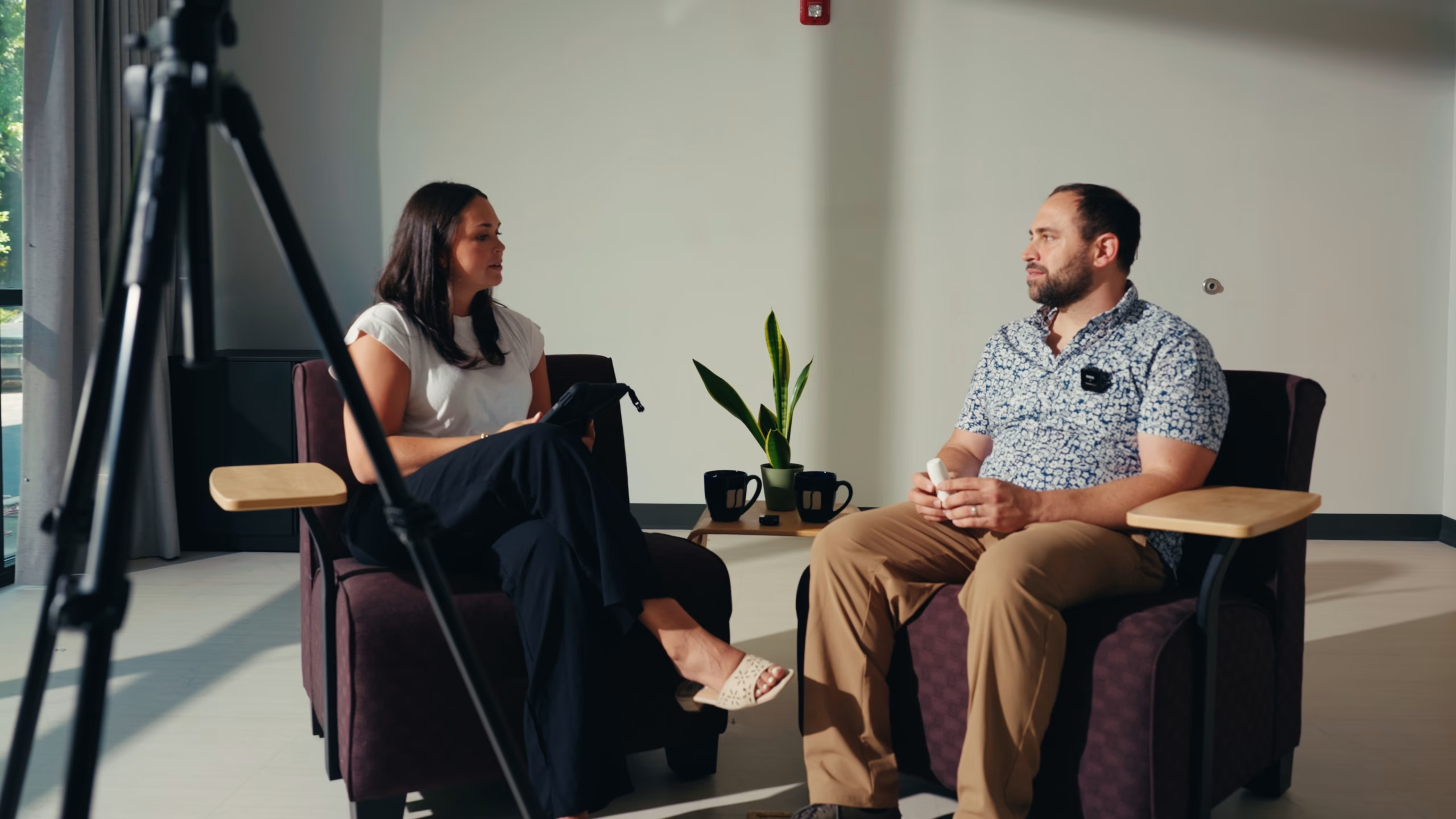
As time went on, more opportunities arose at Gilero—now part of Sanner—to conduct all kinds of HF studies, including formative usability, validation, and risk analysis. I consistently indicated my interest, and anytime there was HF work, I was asked to do it. Soon I earned a senior-level position, and my manager and I received support to build a Sanner America HF department from the ground up. I got to help design our first HF suite, then later helped establish our current state-of-the-art facilities in Durham and Chicago. I’ve assisted in planning furniture, the locations of cameras, and room layouts when simulating different use environments and clinical situations. For Chicago, I suggested that the traditional two-room layout—an observation room with a one-way mirror for the client and HF Engineers to watch users try the device in the study room—would not be an efficient use of space, and that we relocate the observation room elsewhere. That also helps prevent observers from interfering with tests. While we have HF suites in all our US design centers, I expect that this one will eventually be used the most, as Chicago is a major market for HF studies. Back when I was studying psychology, and then engineering, I had no clue I’d eventually work on projects like this!

How to Be Successful as a Human Factors Engineer
My role requires skills in both of my degree areas, so I’m thankful for the way they prepared me to work in unexpected ways. The psychological aspect is the need to be very empathetic toward users. And as far as engineering goes, while I’m not directly designing products anymore, I communicate with engineers about how to improve their designs.
It might seem like my job is to represent the client, but it isn’t. My job is to represent the end user, advocating for their interests to both the client and our engineering team.
Iterate on Yourself
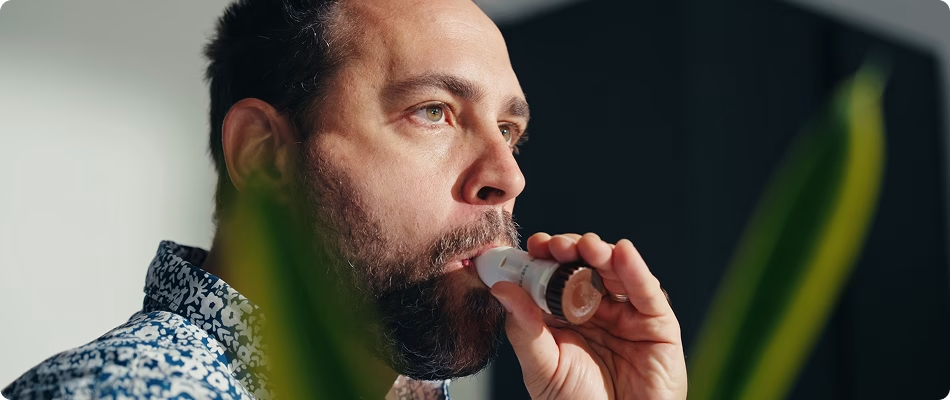
Whether you’re in high school applying to colleges, or multiple years into your career, there is still time to experiment and see what you enjoy doing. I don’t think it’s unfair to say that if you’re not interested in what you’re doing, you won’t be good at it. For me, I greatly enjoy presenting new things to people and watching them overcome new challenges, which helps me see my purpose not just at Sanner, but in protecting health overall. And traditional HF isn’t the only thing I do at work—I’ve also taken an interest in designing labels and instructions for use (IFUs).
When I started at Sanner, I was juggling priorities between my firstborn daughter’s birth, my graduation, and figuring out what role I best fit into. Now I look forward to working every day to make patients’ lives better. It’s common advice to take advantage of opportunities, and I’m here to confirm that it’s good advice. Don’t shy away from something just because you’ve never heard of it, it’s not popular, or you don’t know whether you would like it. There is room in this world to try new things, and I think if we did that more often, we would all be a little happier and healthier.